Few terms in international affairs are deployed as casually as “failed state”. It appears in commentary about countries with high crime rates, contested elections, poor infrastructure and unpopular governments, none of which is what the concept was developed to describe. The underlying analytical work is considerably more disciplined, and worth understanding on its own terms.
The core idea: a monopoly that no longer holds
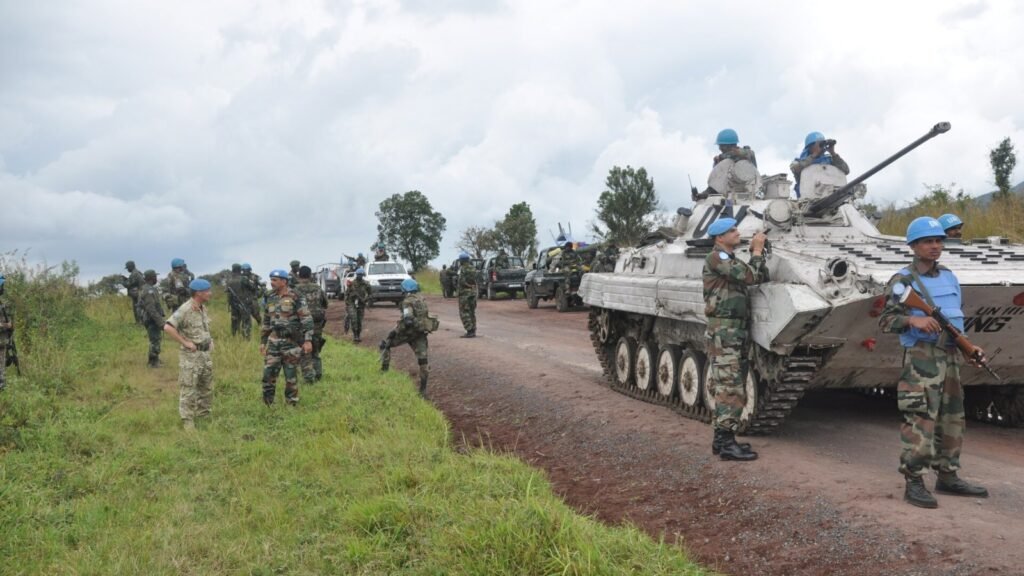
The intellectual foundation is Max Weber’s definition of a state as the entity that successfully claims a monopoly on the legitimate use of physical force within a given territory. State failure, in this framing, is the collapse of that monopoly. Other armed actors — militias, cartels, insurgents, warlords — exercise coercive power across meaningful portions of territory, and the central government either cannot or does not contest it.
Related: why water scarcity is becoming a security issue
This is a narrower test than it first appears. A state with high levels of ordinary crime has not failed; criminals are not claiming governmental authority. A state with an active insurgency in a remote province has not necessarily failed either, provided it retains control elsewhere and the capacity to contest that province. Failure describes a situation where the state has become one armed actor among several rather than the framework within which the others operate.
The functional dimensions
Most working frameworks assess several dimensions rather than issuing a single verdict. Security is the first: can the state protect its territory and population from organised violence. Political legitimacy is the second: do citizens broadly accept the state’s authority as rightful rather than merely unavoidable. Service delivery is the third: does the state provide the basic public goods — courts, schools, clinics, roads, a functioning currency — that distinguish governance from occupation.
A fourth dimension, economic capacity, covers whether the state can raise revenue from its own population. This is more diagnostic than it sounds. States that fund themselves through resource rents or external aid rather than taxation tend to have weaker accountability links to citizens, because they do not need citizens’ consent to fund themselves.
Related: why coalition governments form and break
Fragility as a spectrum
The most significant shift in the literature has been away from a binary label towards a spectrum. Practitioners now generally speak of fragility rather than failure, and assess it as a matter of degree across the dimensions above. The reason is practical: the binary version produced a category into which very few states clearly fell, while a great many states exhibited serious weakness in one or two dimensions while functioning adequately in others.
A country may have effective security forces and no service delivery. Another may deliver services competently in the capital and exercise no authority a hundred miles away. A third may function well by every measure except that no significant portion of the population regards the government as legitimate. These are different problems requiring different responses, and collapsing them into one label obscures that.
Common trajectories
Fragility rarely arrives suddenly. The typical sequence begins with a fiscal problem: the state cannot fund its functions, so it prioritises the security apparatus and the capital city while withdrawing from peripheral regions. That withdrawal creates a governance vacuum, which armed or criminal actors fill, often providing rudimentary services and thereby acquiring a degree of local legitimacy.
The state then faces a choice between an expensive reassertion of control and an accommodation with the new local power. Accommodation is cheaper in the short term and corrosive in the long term, because it establishes that authority is negotiable. Repeated across enough regions, this produces a state that appears intact on a map and is hollow in practice.
Why the label is contested
Three criticisms recur, and all have force. The first is that the concept measures deviation from an idealised Western state model that few countries have ever matched, including Western ones historically. The second is that the label has been used to justify external intervention, giving it a political function independent of its analytical content. The third is that it is descriptive rather than causal — it tells you a state is weak without telling you why, which limits its usefulness for policy.
The response from those who defend the concept is that imperfect measurement is still better than none, and that the shift to multidimensional fragility indices addresses much of the criticism by disaggregating the judgement.
What recovery looks like
The record on rebuilding state capacity is sobering but not empty. The interventions with the best evidence behind them tend to be those that strengthen revenue collection and basic dispute resolution before anything else, on the logic that a state which can tax and can settle disputes has the two foundations everything else rests on.
What consistently works less well is the reverse sequence — building elaborate institutions and elections before the state can fund them or enforce their outputs. Elections in particular, when held early in a fragile setting without prior agreement on the rules, have a documented tendency to formalise existing divisions rather than resolve them.
Reading the indices carefully
Several organisations publish annual fragility rankings. They are useful for tracking direction of travel and much less useful for comparing countries at similar scores, because the underlying indicators are weighted judgements rather than measurements. The most informative way to read them is longitudinally — which dimensions are deteriorating in a given country, and over what period — rather than as a league table.
More from PressBBC
- Why Water Scarcity Is Becoming a Defining Security Issue
- How International Sanctions Work, and What the Evidence Says About Them
- Why Coalition Governments Form — and What Usually Breaks Them
- Browse everything in our World section.
Sources and further reading
- Fragile States Index — the annual index and its twelve underlying indicators
- World Bank — Fragility, Conflict and Violence — research and country classifications